How to Publish Blog Posts and Grow Your Online Presence: A Complete Guide
Learn how to publish high-quality blog posts, improve online visibility, build authority, and grow your audience with a simple content strategy.

Priyanshi
Postnest solution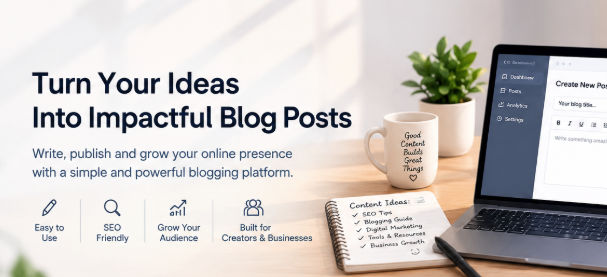
How to Publish Blog Posts and Grow Your Online Presence
Publishing a blog is one of the most effective ways to share knowledge, build an online presence, attract an audience, and create long-term value for your brand.
Whether you are a content creator, business owner, blogger, freelancer, or SEO professional, publishing useful content can help people discover your ideas and learn more about your expertise.
But creating a successful blog involves more than simply writing an article and clicking the publish button.
You need a clear topic, useful information, a strong structure, and a consistent publishing strategy.
In this guide, you'll learn how to publish blog posts effectively and build a stronger online presence.
Why Should You Publish Blog Posts?
A blog gives you a place to share information that can continue providing value over time.
Unlike a social media post that may disappear from your audience's feed within hours, a useful blog article can remain available for readers to discover later.
Publishing blog posts can help you:
Build authority in your industry
Share knowledge and expertise
Attract potential customers
Increase brand visibility
Create useful content for your audience
Support your content marketing strategy
Build a library of valuable information
Modern blogging is also part of a broader content system. A useful article can support search visibility, social content, newsletters, customer education, and other marketing activities.
Step 1: Choose a Topic People Actually Care About
The first step in creating a successful blog post is choosing the right topic.
A beautifully written article may still struggle to attract readers if nobody is interested in the subject.
Before writing, ask yourself:
Who is this article for?
Then consider:
What questions does my audience ask?
What problems can I help solve?
What information are people searching for?
Can I provide a useful or unique perspective?
For example, instead of writing a very broad article called:
SEO Tips
You could create something more specific:
How Small Businesses Can Improve Their Blog SEO
Specific topics often make it easier to understand exactly who the content is designed to help.
Step 2: Understand Search Intent
Search intent means understanding why someone is searching for something.
For example, someone searching:
"How to start a blog"
is probably looking for a step-by-step guide.
Someone searching:
"Best blogging platform"
is likely comparing different options.
Your content should match what the reader actually wants.
Common types of search intent include:
Informational Intent
The user wants information.
Example:
What is content marketing?
Navigational Intent
The user wants to find a specific website or service.
Example:
PostNest login
Commercial Intent
The user is researching products or services.
Example:
Best blog publishing platforms
Transactional Intent
The user wants to take action.
Example:
Create a blog account
Understanding search intent helps you create content that is relevant and useful.
Step 3: Write a Strong and Clear Title
Your blog title is often the first thing people see.
A good title should clearly communicate what the article is about.
Examples:
❌ Everything About Blogging
✅ How to Start a Blog and Publish Your First Article
❌ SEO Information
✅ 10 Practical SEO Tips for New Bloggers
A strong title should be:
Clear
Relevant
Specific
Easy to understand
Avoid creating misleading titles simply to attract clicks.
Your article should deliver what the title promises.
Step 4: Create Helpful and Well-Structured Content
People don't always read every word of a blog article.
Many readers scan the page first.
That's why structure is important.
Use:
Clear headings
Short paragraphs
Lists
Examples
Simple explanations
For example:
What Is a Blog Publishing Platform?
A blog publishing platform is a service or system that allows users to create, manage, and publish articles online.
A good platform should make the publishing process simple while allowing users to focus on creating useful content.
Clear headings and direct answers can also make content easier for both readers and modern search systems to understand.
Step 5: Focus on Quality Instead of Publishing Random Content
Publishing a large number of articles does not automatically create a successful blog.
One genuinely useful article can provide more value than many short articles with little information.
Before publishing, ask:
Does this article solve a problem?
Is the information accurate?
Is it easy to understand?
Does it provide useful examples?
Does it add something valuable?
Your goal should be to create content that a reader would genuinely find helpful.
Step 6: Use Keywords Naturally
Keywords help communicate the topic of your content.
However, repeating the same keyword excessively can make your writing unnatural.
Instead of writing:
Best blogging platform is the best blogging platform because a blogging platform helps bloggers use a blogging platform.
Write naturally:
Choosing the right blogging platform can make it easier to publish content, manage articles, and build an online presence.
Use relevant words and phrases where they naturally fit.
Your first priority should always be helping the reader understand the topic.
Step 7: Make Your Blog Easy to Read
Good content is not only about the information.
Presentation matters too.
Make your article easier to read by using:
Short Paragraphs
Large blocks of text can be difficult to read.
Clear Headings
Headings help readers quickly find information.
Bullet Points
Lists make important information easier to scan.
Images
Relevant images can make content more visually engaging.
Examples
Examples help readers understand complex ideas.
A simple and fast user experience can also encourage visitors to explore more of your content.
Step 8: Build Content Around Related Topics
A strong content strategy is not based on completely random articles.
Instead, think about creating a group of related articles.
For example, if your main topic is blogging, you could create articles about:
How to start a blog
How to write a blog post
Blog SEO tips
Content marketing
Keyword research
How to promote a blog
How to create a content strategy
These connected topics can help you build a useful content library.
You can also connect relevant articles through internal links.
Step 9: Promote Your Blog Content
Publishing an article is only the beginning.
You should also think about how people will discover your content.
You can promote blog posts through:
Social media
Email newsletters
Online communities
Professional networks
Relevant partnerships
You can also repurpose useful articles into different formats, such as social posts, videos, checklists, or short summaries. Content promotion and repurposing can help extend the value of a strong article.
Step 10: Publish Consistently
You don't need to publish ten articles every day.
Consistency is more important than rushing.
For example, you might create a realistic schedule:
Beginner Schedule
1–2 useful articles per week
Growing Blog
2–4 articles per week
The right publishing frequency depends on your available time and the quality you can maintain.
Don't sacrifice quality simply to publish more content.
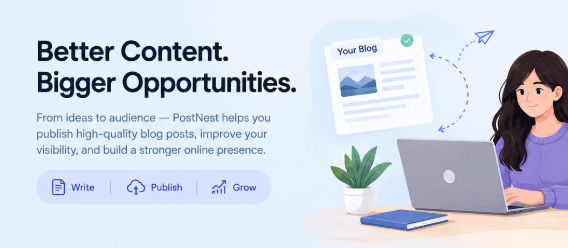
How PostNest Makes Blog Publishing Easier
PostNest is being built to provide a simple environment for people who want to publish and manage blog content.
Whether you're a creator sharing your knowledge, a business publishing educational content, or an SEO professional managing multiple articles, the goal is simple:
Make publishing easier.
With PostNest, users can focus more on their content and less on complicated technical setup.
PostNest Is Designed For:
Content Creators
Share your ideas, experiences, and knowledge.
Businesses
Publish helpful content and build a stronger online presence.
Writers
Create and manage articles through a simple publishing workflow.
SEO Professionals
Publish and manage content as part of a broader content strategy.
The Future of Blogging
Blogging continues to evolve.
Today, a blog is more than a collection of articles.
It can become:
A knowledge hub
A content marketing asset
A brand authority resource
A customer education tool
A long-term content library
AI-powered search is also changing how content is discovered. Clear structure, direct answers, credible information, and genuine expertise are becoming increasingly important alongside traditional SEO practices.
The fundamental principle, however, remains the same:
Create content that is genuinely useful for people.
Start Publishing With Purpose
You don't need to be a professional writer to start blogging.
You simply need something valuable to share.
Start by understanding your audience.
Choose useful topics.
Create clear and helpful content.
Publish consistently.
Improve as you learn.
Over time, your collection of articles can become a valuable resource for your audience and your brand.
Your Ideas Deserve a Place to Be Read
At PostNest, we believe publishing should be simple.
Whether you're sharing knowledge, building your personal brand, promoting a business, or creating valuable content for your audience, every article starts with an idea.
Write your idea.
Publish your knowledge.
Grow your online presence.
PostNest — Write. Publish. Grow.

Postnest solution
PostNest.in - Publish Like a Pro | Modern Tech Blogging Platform